
Code Skills Out of Lab brings simulation to unexpected places
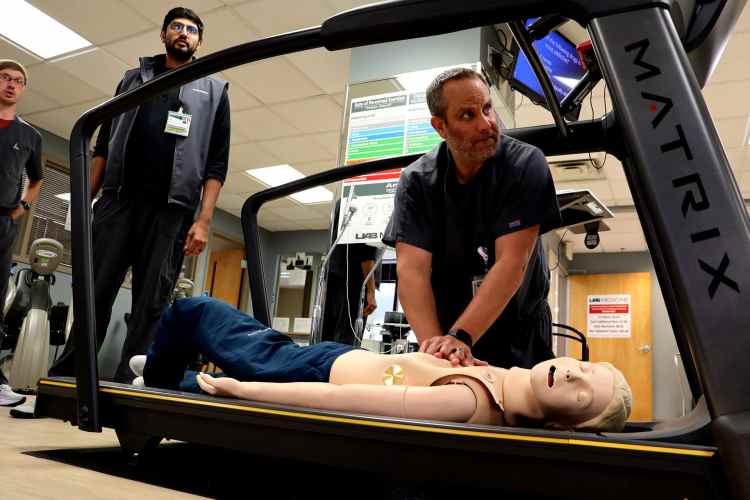
Sometimes, the best classroom isn’t a classroom.
For instance, responding to an emergency in a hyperbaric chamber or rehabilitation gym can present unique challenges that healthcare teams might not encounter in a traditional learning setting or simulation lab.
Through UAB Clinical Simulation’s Code Skills Out of Lab (OOL) program, healthcare professionals can practice responding to emergencies in the very environments where they provide patient care, identifying potential obstacles before a real crisis occurs.
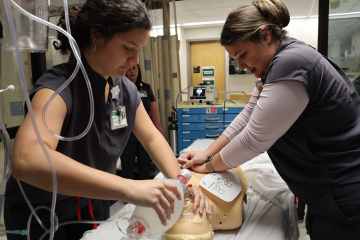
The program uses rapid-cycle deliberate practice (RCDP), an educational approach that allows participants to repeatedly practice critical skills, receive immediate feedback and refine their performance.
According to Kelly Wertz, R.N., ambulatory clinical development specialist and longtime Code Skills OOL facilitator, practicing in the actual clinical environment helps teams identify unexpected factors that could delay lifesaving interventions.
“The goal of these trainings is not only clinical accuracy, but high efficiency,” Wertz said. “The goal is to begin high-quality CPR as soon as possible and shock within 2 minutes if indicated.”
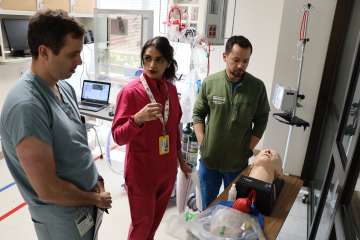
Recent Code Skills OOL sessions in UAB Medicine’s Hyperbaric Medicine Clinic and Spain Rehabilitation Center’s cardiopulmonary rehabilitation gym demonstrate how different environments require specialized approaches to emergency response.
For example, in the Hyperbaric Medicine Clinic, a patient must be decompressed and returned to normal atmospheric pressure before being removed from oxygen-covered sheets to reduce fire risks during defibrillation, Wertz explained.
In the rehabilitation gym, teams must consider how to safely reposition a patient who experiences cardiac arrest while using a treadmill, she added.
Other challenges can be less obvious.
During one ambulatory clinic simulation, Wertz recalled how staff encountered three adjacent examination rooms, each equipped with a different type of exam table or chair. Each required a different approach to positioning a patient for CPR.
Wertz mentioned another session in which participants discovered that their automated external defibrillator (AED) had shorter pad cables than those found on manual defibrillators. The discovery prompted the development of a department-specific plan for positioning the device during resuscitation, she said, helping prevent potential delays.
“During these trainings, staff are able to practice manipulating their department equipment and prevent potential critical time delays during an actual emergency,” Wertz said.
The program also makes simulation more accessible to departments throughout UAB Medicine, with Clinical Simulation’s immersive simulation team coordinating equipment delivery, setup and technical support.
For Andres Viles, director of immersive simulation, that accessibility is central to the program’s mission.
“We’ve found an opportunity to meet people where they are and help them deliver training with their staff and team members,” Viles said.
Ultimately, Wertz hopes participants leave with greater confidence in their ability to respond effectively when an emergency occurs.
“Having a plan is important, but actually practicing that plan helps staff feel more comfortable and capable,” she said. “Knowing they have ‘done this before’ can reduce uncertainty and provide peace of mind when faced with a real event.”
Parties interested in hosting Code Skills OOL training can visit uabsimulation.org or email simulation@uabmc.edu to learn more.
UAB Medicine’s Clinical Simulation program offers opportunities for individuals and teams across UAB Medicine and beyond to practice before they deliver care. We encourage all who provide and support patient care to “Sim First.” Together, we can put our patients’ safety first.
0 Comments