
Simulation helps prepare clinicians for rare, high-risk OB emergencies
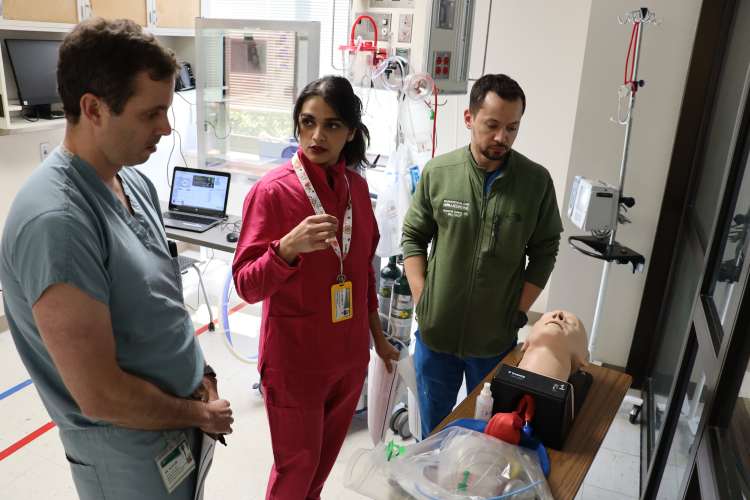
When critically ill obstetric patients require intensive care, clinicians must make rapid decisions in situations they may encounter only rarely throughout their careers.
To help bridge that gap, UAB Clinical Simulation recently partnered with faculty from UAB’s Division of Pulmonary, Allergy and Critical Care Medicine to pilot the Fundamentals of Critical Care Support–Obstetrics (FCCS-OB) course, combining evidence-based instruction with multiple simulation modalities to prepare learners for some of the most complex emergencies in OB care.
The course was developed to address what organizers identified as a need for more structured obstetric critical care training.
“The decision to bring the FCCS-OB course to UAB was driven by a clear gap in structured training for obstetric critical care,” said Bibi Aneesah Jaumally, M.D., assistant professor in the Division of Pulmonary, Allergy and Critical Care Medicine. “While obstetric emergencies are relatively infrequently encountered in the ICU, they require rapid recognition, coordination and execution of high-stakes interventions.”
Beyond strengthening clinical knowledge, the course emphasized communication, teamwork and systems-based approaches essential to managing critically ill obstetric patients.
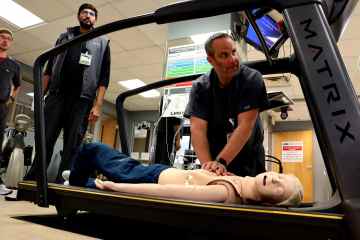
As faculty designed the curriculum, they intentionally matched each skills station with the simulation modality best suited to its learning objectives. In addition to high-fidelity manikin-based simulation, the course incorporated Visually Enhanced Mental Simulation (VEMS), a platform focused on mental rehearsal, communication and critical thinking rather than technical procedures.
According to Jaumally, learners reported that VEMS reduced cognitive burden and helped them prioritize critical actions during complex scenarios, such as postpartum hemorrhage and obstetric trauma, where multiple interventions must be performed in rapid succession. She said the platform was especially effective in helping participants focus on decision-making while reinforcing clinical workflows.
Brandon Frady, DNP, FCCS-OB course director for the Society of Critical Care Medicine, said UAB’s collaborative approach stood out throughout the pilot.
“The dedication and collaboration of the critical care faculty and simulation team were evident throughout the course and were instrumental to its success,” Frady said.
He also praised the learners’ engagement and the team’s “thoughtful use of multiple levels of simulation fidelity, including VEMS, to reinforce key concepts.”
Frady noted that simulation enables participants to apply classroom learning in realistic, high-acuity scenarios, allowing them to strengthen clinical judgment, teamwork and communication while receiving immediate feedback in a safe learning environment.
Following the successful pilot, organizers believe the course provides a reproducible model for obstetric critical care education that combines evidence-based content with innovative simulation strategies.
Jaumally said the team hopes the approach will continue to expand at UAB, while serving as a model for other institutions seeking to strengthen preparedness for rare but life-threatening obstetric emergencies.
UAB Medicine’s Clinical Simulation program offers opportunities for individuals and teams across UAB Medicine and beyond to practice before they deliver care. We encourage all who provide and support patient care to “Sim First.” Together, we can put our patients’ safety first.

0 Comments