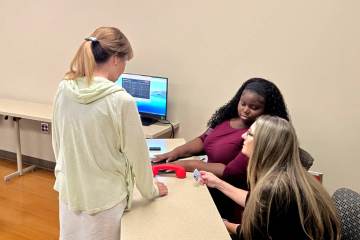
ED registration sim checks in at UAB St. Vincent’s
A patient walks into the emergency department and heads to the registration desk. Something about how they look or what they say catches a staff member’s attention. What happens next?

A patient walks into the emergency department and heads to the registration desk. Something about how they look or what they say catches a staff member’s attention. What happens next?
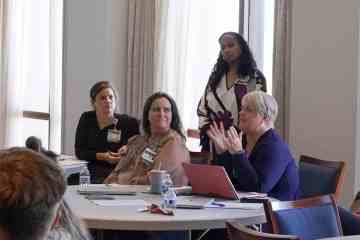
What happens after the emergency is over? That’s the question UAB Clinical Simulation’s Mobile Simulation team put in front of leaders at the 2026 Alabama Rural Health Collaborative Summit.
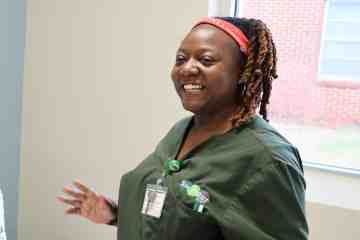
Before she started bringing simulation to rural hospitals, Mercedees Willis cared for patients from several angles.
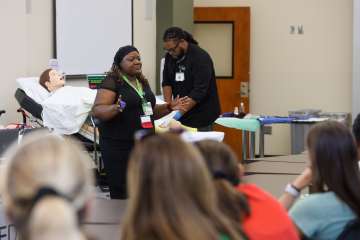
The UAB Mobile Simulation team highlighted its efforts to expand healthcare education in underserved communities during the 2026 Center for Interprofessional Education and Simulation (CIPES) Symposium.

Although UAB Mobile Simulation is always on the move, facilitator Brittany Kelly has built a solid foundation for simulation-based learning at Lakeland Community Hospital in Haleyville, Ala.
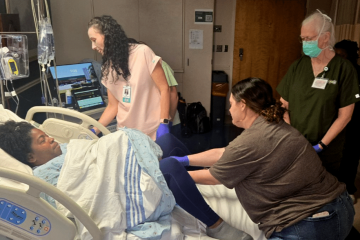
Some emergencies you can see coming. Shoulder dystocia isn’t one of them. The UAB Mobile Simulation team partnered with Russell Medical Center in Alexander City, Ala., for a hybrid immersive simulation built around exactly that scenario.

For nearly five years, Jobin Abraham has helped keep UAB Mobile Simulation moving—first as a Simulation Specialist and now as Program Director I.

UAB Clinical Simulation’s Mobile Simulation team recently brought a high-stakes OB scenario to J. Paul Jones Hospital in Camden, Alabama, one of the rural communities the mobile program was built to reach.

What does it actually feel like to be a patient? That’s the question UAB Clinical Simulation’s Mobile Simulation team brought to Lakeland Community Hospital in Haleyville, Alabama, on April 7. The answers surprised even seasoned healthcare veterans.
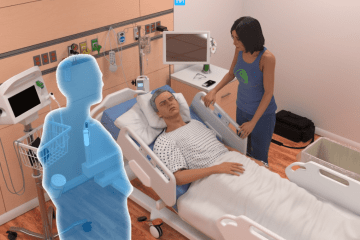
Our pain communication simulation places learners in a realistic recovery-room scenario where assessment, explanation and response matter as much as clinical interventions.