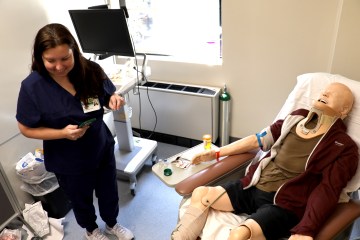
Sim Room of Errors returns for Quality Week
In health care, there’s plenty of room for error—which is why UAB Clinical Simulation reprised its Sim Room of Errors for Quality Week 2024.

In health care, there’s plenty of room for error—which is why UAB Clinical Simulation reprised its Sim Room of Errors for Quality Week 2024.
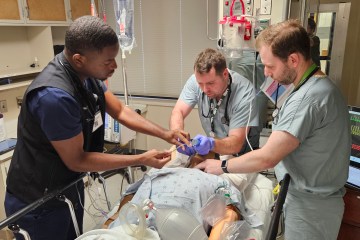
With UAB Clinical Simulation’s Fundamental Critical Care Support (FCCS) simulation, residents can apply their didactic learnings in a realistic, simulated setting.
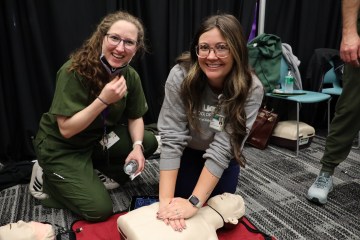
Simulation works. It’s a message UAB Clinical Simulation imparted to more than a thousand eighth and ninth-grade students from 22 school systems across six Alabama counties at October’s Worlds of Work recruitment expo.
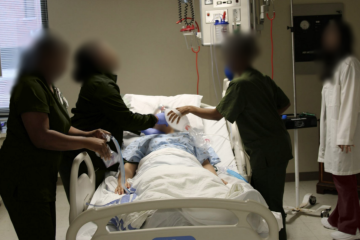
Providing proper tracheostomy care is crucial in preventing complications and ensuring patient comfort and safety. From routine maintenance to emergency interventions, understanding the nuances of tracheostomy management can make a significant difference in patient outcomes.
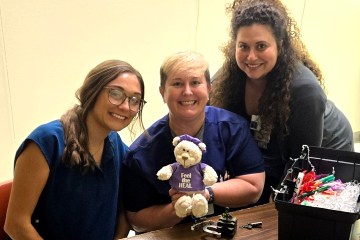
On Sept.19, the UAB Mobile Simulation team, in partnership with Regional Medical Center of Central Alabama (RMCCA), hosted an exciting tabletop escape room simulation focused on sepsis management.

On July 25, the UAB Mobile Simulation team, in partnership with Russell Medical Center, conducted an immersive simulation focused on managing a patient with traumatic injuries.
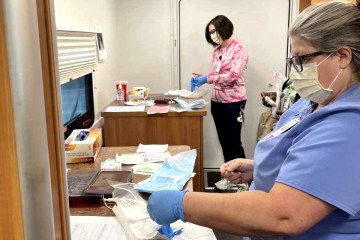
On Sept. 16, UAB Mobile Simulation conducted a mediport access simulation in collaboration with St. Vincent’s St. Clair Hospital.
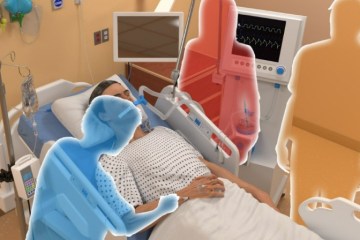
UAB Clinical Simulation and Mobile Simulation are thrilled to offer their state-of-the-art eLearning platform, designed to enhance the training and professional development of all members of our health-care workforce.

UAB Clinical Simulation’s annual Shock Week offers interprofessional learners the chance to sharpen their code skills. But, unlike its toothy cable TV counterpart, there’s nothing fishy about it.

UAB Clinical Simulation observed Healthcare Simulation Week Sept. 16-20. Hosted by the Society for Simulation in Healthcare (SSH), Healthcare Simulation Week celebrates professionals across the globe who use simulation to improve the safety, effectiveness, and efficiency of health-care delivery.