
‘One Week Less’ sim inspires community collaboration

A lot can happen in one week.
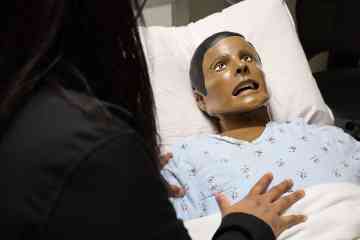
Through UAB Clinical Simulation’s “One Week Less: Mental Health and Developmental Disability” simulation, learners experience just how quickly decisions surrounding patients with complex mental health disorders and developmental disabilities can ripple throughout a hospital, healthcare system and communities across Alabama.
Developed through a collaborative partnership among UAB Clinical Simulation, Nate Horsley, senior health care policy advisor for the University of Alabama System; Alison Garretson, vice president of Care Continuum Services; Brittany Lindsey, assistant vice president of the Center for Patient Flow; and Elizabeth Caine, vice president of the Center for Psychiatric Medicine, the immersive tabletop simulation was designed to highlight the challenges surrounding UAB’s long-stay patient population while fostering meaningful conversations about solutions that extend beyond the hospital.
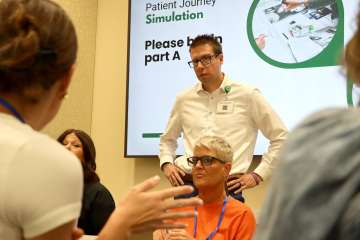
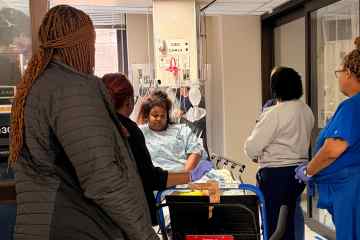
Most recently, members of Leadership Alabama participated in the simulation, stepping into the role of hospital leaders responsible for managing patient flow, allocating limited resources and making difficult decisions about patient care. As the experience unfolded, participants witnessed how limited community resources can affect not only individual patients, but also hospitals, healthcare providers and communities statewide.
“Reading statistics or listening to a presentation cannot fully capture the complexity of the challenges facing hospitals,” Horsley said. “Through an immersive simulation, participants experience firsthand the difficult decisions hospitals face, gaining a deeper appreciation of the impact on UAB’s patients, workforce and day-to-day operations.”
According to its website, Leadership Alabama brings together established leaders from business, government, education, healthcare and nonprofit organizations to better understand the issues shaping Alabama’s future. For Garretson, exposing community leaders to the realities surrounding long-stay patients is essential, as many of the factors influencing their care extend far beyond the healthcare system.
“Mental health disorders and developmental disabilities require more than just a clinical or medical office-based approach to care,” Garretson said. “These conditions require stability and support at multiple levels, including the family unit, specialized educational curriculum both for the patient and the educators, workforce adjustments to facilitate employment, significant community support for housing, social connections and reducing stigmas.”
Garretson said the simulation also demonstrates how gaps in those community supports can create ripple effects throughout Alabama’s healthcare system.
“This simulation helps participants see the full impact of holding or placing patients in hospital beds when they do not require inpatient-level care and how that limits access for patients who are truly ill and need tertiary and quaternary services,” she said. “When hospital capacity is occupied by patients who could safely receive care in a lower-acuity setting, beds become unavailable for critically ill patients across the state who require specialized inpatient treatment.”
Rather than presenting those challenges through statistics alone, the simulation places participants in the middle of the decision-making process.
“The simulation transforms an abstract problem into an experiential one,” Horsley said. “Participants gain insight into how limited community resources affect patients, healthcare providers, hospital operations, public spending and the broader community.”
Horsley hopes participants leave with more than a better understanding of the issue.
“Our goal is for leaders to return to their organizations ready to start meaningful conversations about expanding community partnerships, increasing access to needed services and aligning policies and resources to address gaps in care,” he said. “We also hope the simulation inspires a sense of shared responsibility, encouraging healthcare providers, policymakers, business leaders and community stakeholders to work together on sustainable solutions that improve patient outcomes, strengthen the healthcare system and benefit the entire community.”
“Simulation has a unique ability to bring people together around complex challenges in a way that encourages meaningful dialogue and shared understanding,” said Marjorie Lee White, M.D., vice president of UAB Clinical Simulation. “By building those connections and conversations, we’re better positioned to work together toward solutions that ultimately improve care for patients across Alabama.”
UAB Clinical Simulation extends special thanks to Elizabeth Caine, Rory Plasencia, Leigh Duncan, Val Labbe, Ashlea Herrero, Natalie Hackney, Brittany Lindsey, Alison Garretson, Frankie Wallis, Nate Horsley and Cynthia Ransburg-Brown for their invaluable assistance in simulation development and deployment.
Interested in bringing simulation to your department, team or program? Email simulation@uabmc.edu to learn how you can get involved.
UAB Medicine’s Clinical Simulation program offers opportunities for individuals and teams across UAB Medicine and beyond to practice before they deliver care. We encourage all who provide and support patient care to “Sim First.” Together, we can put our patients’ safety first.
0 Comments