
Clin Sim scopes out emergency endoscopy sim at UAB Highlands
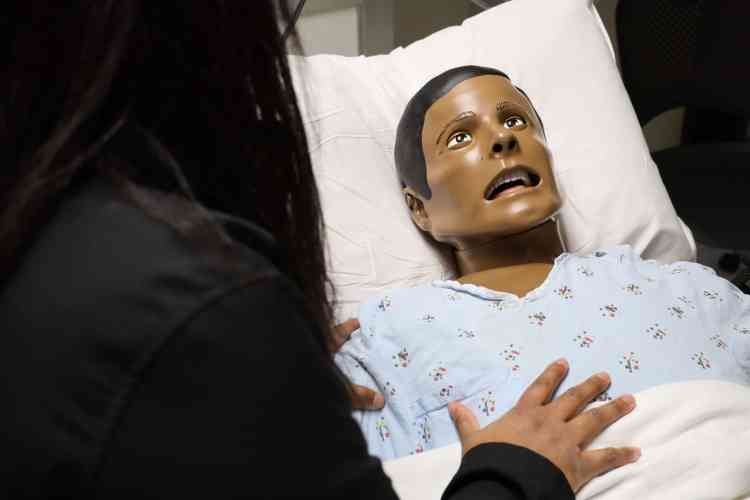
Endoscopies can offer a closer look to reveal what might go unnoticed. Before expanding after-hours emergency endoscopic services at UAB Highlands, UAB Clinical Simulation used systems simulation to do the same for a new clinical workflow.
Specifically, Clinical Simulation partnered with UAB Digestive Health Services to conduct a systems-based workflow and process simulation focused on managing medical emergencies in the Highlands operating room after normal business hours.
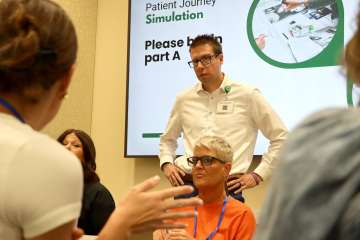
According to April Belle, director of systems simulation, the experience served as a proactive risk-mitigation strategy ahead of the launch of after-hours emergency endoscopic services requiring general anesthesia. Participants included an interprofessional group of gastroenterologists, endoscopy nurses and technicians, PACU nurses and technicians, CRNAs and Medical Emergency Team (MET)/STAT responders.
“Our endoscopy team wanted to ensure we understand the processes and resource availability for using the Highlands OR after hours,” said Anyet Belyeu, senior nursing director for UAB Medicine’s Digestive Health Services and Endoscopic Services. “The use of the OR after hours and on weekends will be a new process for our endoscopy team, and we wanted to identify all issues, concerns, barriers and opportunities to ensure we have an efficient process.”
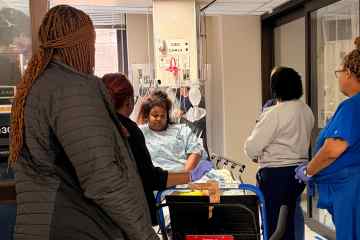
Simulation scenarios were designed to evaluate both routine and high-acuity situations, Belle explained, noting that teams worked through an endoscopic procedure, a Code Blue event and the processes surrounding patient transport, procedural care and post-procedure workflow. The exercise also examined communication pathways, emergency activation procedures, role clarity and access to critical equipment and resources.
According to Belyeu, bringing together representatives from multiple disciplines was essential to understanding how the new workflow would function in practice.
“The interprofessional perspective is valuable to all team members understanding the process and workflow,” she said. “We identified gaps in communication and understanding of notification processes amongst several teams, including the endoscopy team, which is comprised of MDs, RNs and endoscopy technicians. Having interprofessional teams engage and provide various perspectives is important to bringing ideas and thoughts together … to improve care.”
Beyond testing processes, the simulation created an opportunity for staff to ask questions, clarify expectations and build confidence before caring for patients under the new model, Belle said. Insights gathered during the exercise helped identify workflow improvements, strengthen communication strategies and increase awareness of resources available across the organization.
“The engagement and interaction during the simulation is a great way for various disciplines to come together and have fun engaging in a shared learning experience that benefits our teams and our patients,” Belyeu said. “The simulation allowed my team to go back and develop processes and improve communication and workflows that all team members are aware of.”
For Belyeu, one of the most valuable outcomes was helping teams feel prepared for change.
“The ability to decrease fear of new initiatives is an invaluable support that simulation provides,” she said.
UAB Medicine’s Clinical Simulation program offers opportunities for individuals and teams across UAB Medicine and beyond to practice before they deliver care. We encourage all who provide and support patient care to “Sim First.” Together, we can put our patients’ safety first.

0 Comments