
Clinical Simulation introduces Code Q systems sim
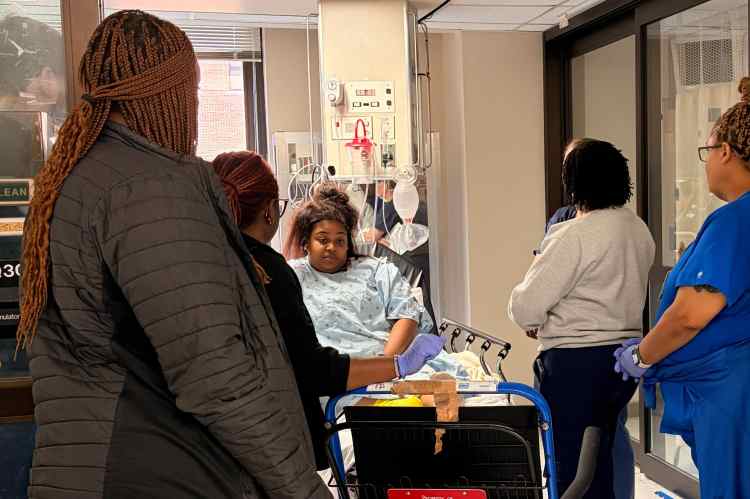
A new systems simulation experience will help UAB Medicine learners mind their Ps and Code Qs.
In collaboration with the Center for Patient Flow’s Conflict Response Team, UAB Clinical Simulation conducted an in situ (on-site) Code Q simulation at UAB Highlands to evaluate and support the implementation of an expanded de-escalation response model with acute inpatient care settings.
The Code Q response is a patient and staff safety initiative designed to provide timely verbal and physical de-escalation interventions during escalating behavioral events, thereby reducing risk of harm and supporting a safe care environment.
At UAB Medicine, the Code Q process is transitioning from a service model primarily housed within psychiatric care areas to a broader application across acute inpatient units.
According to April Belle, UAB Clinical Simulation’s director of systems simulation, UAB Highlands was selected as the initial implementation site due to its planned role as the inaugural location for this expanded inpatient acute Code Q response.
Facilitated by Felicia Underwood, conflict response team manager with the Center for Patient Flow, the simulation served to assess operational readiness, clarify team roles and identify potential workflow and communication opportunities prior to live deployment.
The inpatient acute Code Q model differs from the existing process by incorporating a multidisciplinary response team, including behavioral health technicians, STAT RNs, UAB Police, psychiatric nurse liaisons, pharmacists, bedside nursing staff and provider teams, Belle explained.
“This coordinated response is designed to support rapid situational assessment, medication and clinical intervention as appropriate and safe management of escalating events,” she said. “The simulation emphasized team communication, role clarity and coordinated decision-making to promote patient-centered care while prioritizing the safety of patients, staff and visitors.”
Findings from this simulation will inform operational refinement, staff education and ongoing quality and safety oversight as the inpatient acute Code Q response is scaled to additional locations, Belle said.
If your team is launching a new service, changing a workflow or simply wants to test how your system responds under pressure, UAB Clinical Simulation can help. To learn more, email simulation@uabmc.edu.
UAB Medicine’s Clinical Simulation program offers opportunities for individuals and teams across UAB Medicine and beyond to practice before they deliver care. We encourage all who provide and support patient care to “Sim First.” Together, we can put our patients’ safety first.

0 Comments