
Clin Sim, OIPS partner with Harvard’s Center for Medical Simulation to host HSEDD@SimUAB 2026
Developing skilled simulationists takes more than equipment and scenarios. It takes training the people who co-design and debrief them—skilled facilitators who can create meaningful learning experiences, foster psychological safety and guide learners through thoughtful reflection.
To help develop those skills, Clinical Simulation and the Office of Interprofessional Simulation (OIPS) recently partnered with the Center for Medical Simulation (CMS), a Harvard-affiliated leader in healthcare simulation education, to offer Healthcare Simulation Essentials: Design and Debriefing (HSEDD).
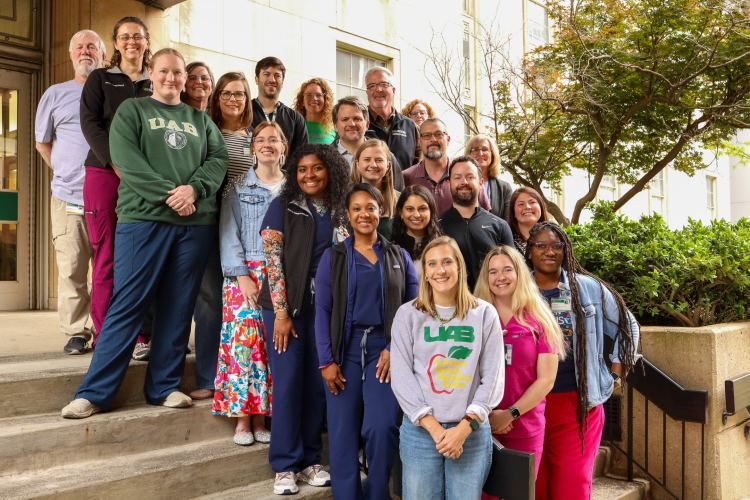
Held May 5-8 in UAB Medicine’s Clinical Simulation space, the four-day course—now in its 11th interation—brought together 20 interprofessional participants from UAB, Children’s of Alabama and the broader UAB Health System to strengthen their abilities in simulation design and debriefing.
Among them was Jessica Campbell, Pharm.D., opioid stewardship pharmacist with UAB Medicine Opioid Stewardship.
Campbell currently helps facilitate a quarterly opioid-focused simulation and was eager to expand her understanding of how simulation can be used to improve healthcare education and address stigma surrounding opioid use.
“The concept that changed the way I think about simulation-based education was learning how to identify cognitive frames and use those to guide the debriefing session,” Campbell said. “Frames drive actions that lead to results, and without exploring those frames, important teaching moments can be lost during debriefing.”
She also noted the impact of psychological safety throughout the course, observing how CMS faculty not only emphasized its importance but modeled it consistently in their teaching.
For Campbell, one of simulation’s greatest strengths is its ability to bring healthcare professionals together around a shared goal of learning and improvement.
“Whether we’re learning to work together in a high-stakes situation, we’re coming together to get insight into a stigmatized condition or we’re coming together to hone our skills, it’s an opportunity to collaborate and network with each other, lean on each other and use our individual skillsets together to foster growth for the benefit of our patients,” she said.
The course’s train-the-trainer approach reflects a shared commitment by UAB Clinical Simulation and OIPS to strengthen simulation programs across the health system. By equipping facilitators with advanced skills in scenario design and debriefing, the program helps ensure future learners receive meaningful educational experiences that translate to clinical practice.
Campbell is already putting those lessons into action and is working with her Opioid Stewardship colleagues to develop a new simulation she hopes to incorporate into future educational offerings.
Ultimately, she believes stronger simulation design and debriefing create safer opportunities for healthcare professionals to learn, grow and refine their practice before caring for real patients.
“When we design strong simulations and psychologically safe debriefings,” Campbell said, “we’re providing our learners with the best opportunities for identifying their knowledge gaps, fine-tuning their abilities and growing their skillsets, which ultimately helps improve how we provide healthcare.”
UAB Medicine’s Clinical Simulation program offers opportunities for individuals and teams across UAB Medicine and beyond to practice before they deliver care. We encourage all who provide and support patient care to “Sim First.” Together, we can put our patients’ safety first.

0 Comments