
Clinical Simulation tunes Code Skills experience for music therapists
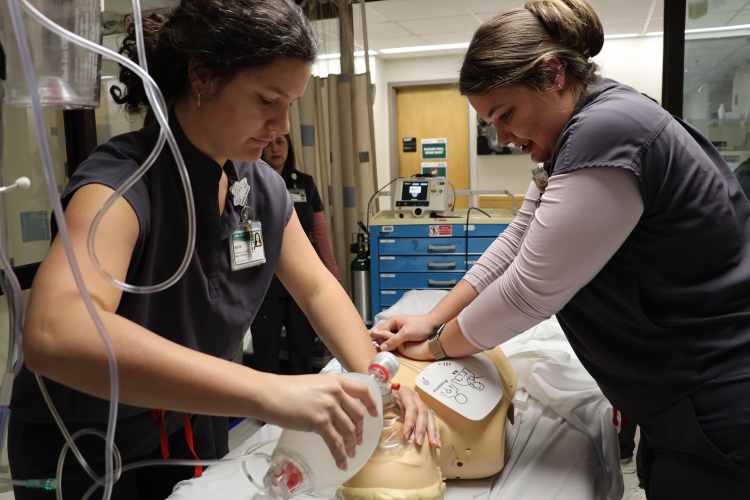
Typically, learners are encouraged to take notes. During a recent immersive simulation, however, the focus was on the professionals who make them.
Music therapists from UAB Medicine’s Spain Rehabilitation Center recently participated in a Code Skills Out of Lab experience, a simulation designed to build confidence in recognizing patient deterioration, initiating high-quality CPR and responding during the critical first minutes of a medical emergency.
According to Denise Graham, rehabilitation services education coordinator with Spain Rehab, music therapists were a natural fit for the training.
“Music therapists are often at the bedside in higher-acuity areas and can be present when a patient starts to decline,” Graham said. “While medical events may happen more frequently with PT and OT when patients are up and mobile, this training ensures music therapists are just as prepared to recognize an emergency and take action when it happens.”
Music therapists support patients’ emotional, cognitive and physical needs through one-on-one sessions in a variety of clinical settings, Graham said. Because of that close interaction, they may be among the first to recognize when something is wrong.
During the drills, participants worked through scenarios they could realistically encounter during patient care. They practiced recognizing cardiac arrest, initiating high-quality CPR, calling for help and maintaining situational awareness until the code team arrived.
Graham said one of the most notable outcomes was the confidence participants gained throughout the experience.
“A key takeaway was how quickly participants gained confidence,” she continued. “Many shared that practicing in a realistic, low-pressure setting helped reduce uncertainty and reinforced that they can take immediate, life-saving action when needed.”
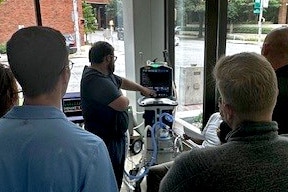
The training also introduced participants to equipment they may not regularly use, including crash carts. Increased familiarity helped reinforce that everyone at the bedside can contribute during an emergency response.
“It was also great to see their comfort level grow with the crash cart,” Graham said. “That unfamiliarity can cause people to step back during emergencies, so building that confidence helps them feel more ready to jump in and support the team.”
Ultimately, the goal extends beyond technical skills. By helping music therapists better understand their role during emergencies and empowering them to act decisively, Graham said, the training ultimately strengthens the entire care team and supports safer patient care.
While often associated with clinical staff, Code Skills Out of Lab experiences can be adapted for virtually any healthcare professional who interacts directly with patients and may find themselves responding during the first critical moments of an emergency.
“Those first few minutes really matter, and this training helps them feel like they can recognize what’s going on and take action instead of feeling unsure,” Graham said. “More than anything, it reinforces that everyone at the bedside has a role to play in keeping our patients safe.”
UAB Medicine’s Clinical Simulation program offers opportunities for individuals and teams across UAB Medicine and beyond to practice before they deliver care. We encourage all who provide and support patient care to “Sim First.” Together, we can put our patients’ safety first.

0 Comments