Brain injury sim pilot helps rehab team prep for challenging moments
Behavior changes after a brain injury can complicate rehabilitation for patients, caregivers and staff. A new pilot simulation at the UAB Rehabilitation Pavilion gave an interdisciplinary team space to practice de-escalation, caregiver communication and ways to make the care environment safer.
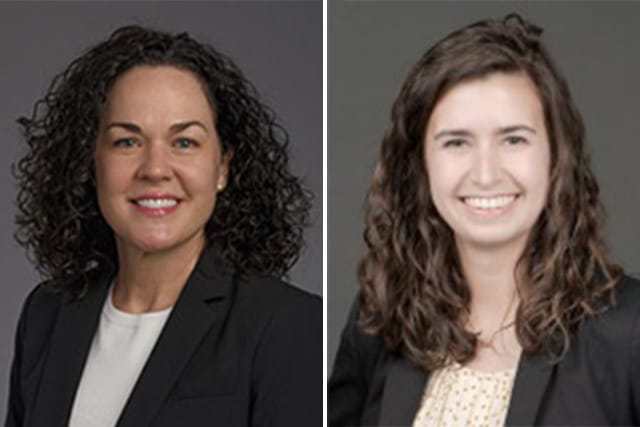
According to facilitator Emma Lucas, Ph.D., MSW, MPH, the pilot grew from a gap identified by the Brain Injury Rehabilitation Program (BIRP), which lacked a standardized interdisciplinary process for managing maladaptive behaviors and consistent staff education on prevention and intervention.
The Rehab Services team, including Lucas and fellow facilitator Gabriella Camacho, PT, DPT, NPS, connected with UAB Clinical Simulation to explore how simulation could extend classroom learning into realistic practice. “We hoped that the participants in the pilot would gain an appreciation for the simulation process and offer feedback regarding how to improve the experience when we go live,” Lucas said.
Set in the Rehab Pavilion’s activities of daily living (ADL) suite, arranged like a studio apartment, the scenario featured a standardized patient and followed an occupational therapy session.
The patient began the kitchen activity calmly, washing dishes with an occupational therapist and nurse while his care partner sat nearby. As conversation turned to his wish to return home, he grew agitated; his care partner’s rising frustration added to the tension. When he threw an item, staff stopped the activity and focused on safety and de-escalation.They helped him return to bed and asked the caregiver to take a break, with plans to reconnect once the situation had settled.
Occupational therapist Bailey Poor said the encounter highlighted how brain injury can affect behavior, emotional regulation and communication, as well as the strain those changes can place on caregivers. The standardized patient’s portrayal helped learners engage with that complexity.
The familiar setting also mattered. “Having it in the space that we use every day was very helpful,” said Emily Wells, MSW, LICSW-S, a psychotherapist and social worker.
Because the team knew the room, learners could focus on the interaction and choose an activity naturally.
In debrief, the team saw peers learning from one another and interdisciplinary discussion strengthening the experience, Lucas said. Learning goals included practicing professional redirection, communicating with a distressed caregiver and recognizing triggers that can be reduced through environmental changes.
Lucas said the next phase will build on the pilot, with plans to develop a more formalized therapy agenda to perform in the ADL suite, as well as a nursing-specific simulation.
Interested in bringing simulation to your department or program? Email UAB Clinical Simulation at simulation@uabmc.edu to learn how you can get involved.
UAB Medicine’s Clinical Simulation program offers opportunities for individuals and teams across UAB Medicine and beyond to practice before they deliver care. We encourage all who provide and support patient care to “Sim First.” Together, we can put our patients’ safety first.