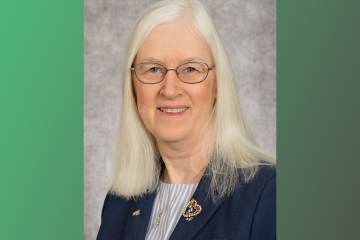
Sim Stars: Sharon Phelan, M.D.
Sharon Phelan, M.D., believes that some of the most important lessons in medicine don’t come from a textbook—they come from doing.

Sharon Phelan, M.D., believes that some of the most important lessons in medicine don’t come from a textbook—they come from doing.
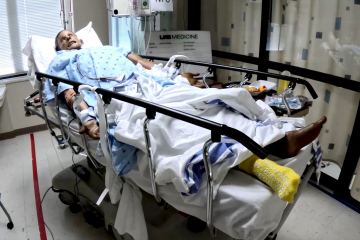
Virtual simulation continues to evolve, and immersive technology offers an exciting opportunity to build on what already works.
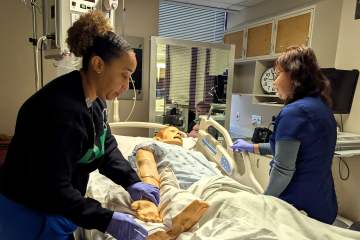
Wound care can be a sore subject. Fortunately, through collaboration with UAB Clinical Simulation, UAB’s Wound Scholar Program continues to empower frontline staff to meet the growing need for wound care prevention—and treatment—at the bedside.
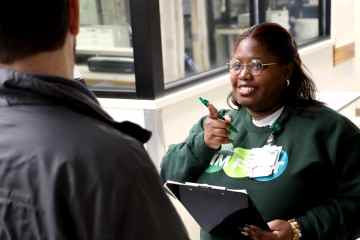
Clinical Simulation’s MSHA internship provides exposure to the intersection of clinical education, communication and multidisciplinary collaboration within a large academic health system.
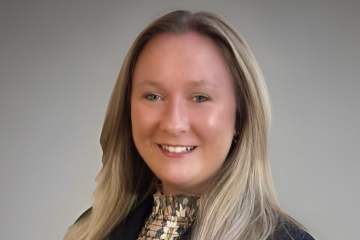
As a facilitator and stroke program coordinator with the Department of Neurology at UAB Hospital, Audra Boyles, R.N. brings both clinical precision and innovative thinking to health-care simulation—particularly in the realm of stroke education.
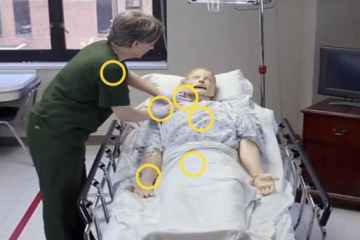
Embedded in each iSim experience is a brief survey that allows learners to share what worked well and where improvements are needed. Over the past year, this feedback has been consistently positive, with many learners highlighting the relevance and realism of the simulations.
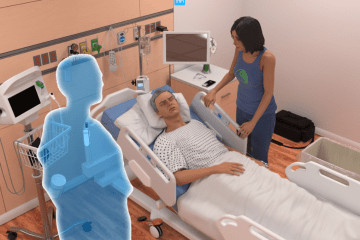
Our pain communication simulation places learners in a realistic recovery-room scenario where assessment, explanation and response matter as much as clinical interventions.

This month, UAB Mobile Simulation is proud to highlight Bonny Joly, a senior simulation coordinator whose work strengthens the connection between mobile and virtual learning across the health system.
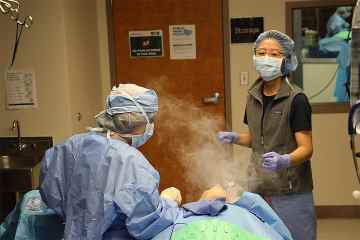
UAB Clinical Simulation recently launched a new pilot simulation focused on one of the operating room’s most serious, but least frequently encountered, emergencies: airway fires.

In collaboration with UAB Medicine Radiology leadership, the sim center’s systems team developed an in situ resuscitation simulation to be held unannounced on a Saturday in The Kirklin Clinic’s basement MRI suite.