Team Spotlight: Mercedees Willis, DNP
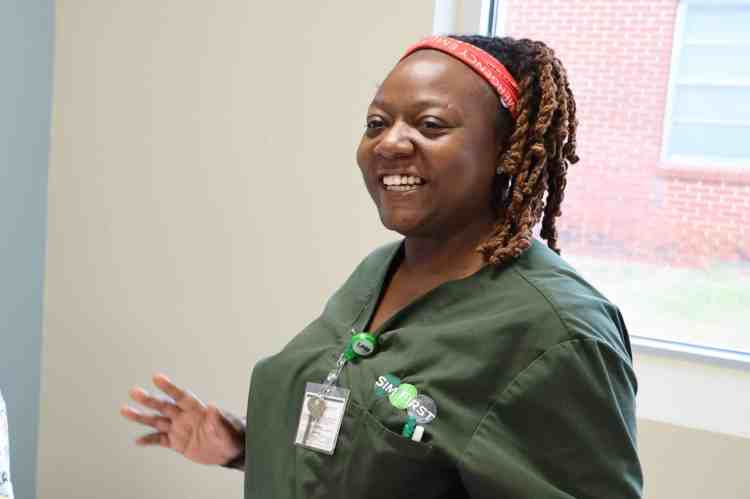
Before she started bringing simulation to rural hospitals, Mercedees Willis cared for patients from several angles. She started as a respiratory therapist in a neonatal intensive care unit, worked as a nurse in a surgical ICU and later became an adult-gerontology acute care nurse practitioner in an emergency department. Those roles taught her how people from different disciplines work together when a patient’s condition changes quickly.
Simulation found her before she went looking for it. As a new nurse practitioner, she felt nervous every time she was called to a rapid response, often as the only provider on scene. Then she was introduced to in situ simulation, which means practicing right where the care happens. The Clinical Simulation team would bring a manikin to the bedside with no warning, popping up on any day, at any time, much like a real rapid response.
Over time, that nervousness turned into confidence. She came to value what pilots, actors and athletes have long known: you get to rehearse before the moment counts.
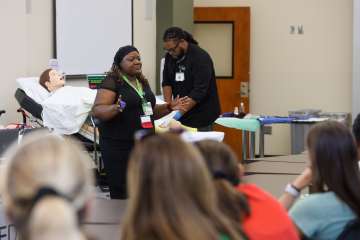
Willis joined UAB Mobile Simulation in 2021 and now serves as its senior mobile simulation coordinator. When the position opened, it felt like a natural fit. Today she works with rural partners across Alabama to identify what their teams want to practice and build simulations they can run in their own clinical spaces.
What she enjoys most is the takeaways.
“Practicing where staff actually work lets them see how their own roles, equipment and workflows shape a response,” she said. “Once they see that, they can change the way they do things, and those changes make a real difference where they are. My goal is simple: I want people to experience simulation before they care for real patients. Everyone who shows up for patients cares a lot. They deserve the chance to practice before it counts.”
UAB Medicine’s Clinical Simulation program offers opportunities for individuals and teams across UAB Medicine and beyond to practice before they deliver care. We encourage all who provide and support patient care to “Sim First.” Together, we can put our patients’ safety first.