
Sim Stars: Cassie West, M.S.N., R.N., CPAN
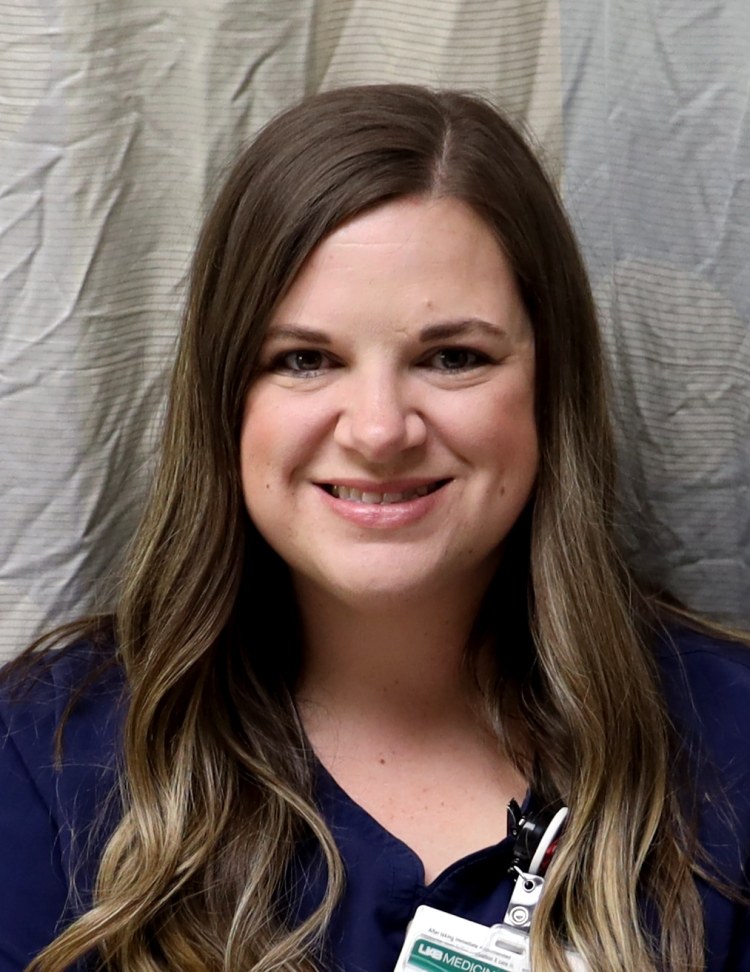
Sim Stars is a regular feature in UAB Clinical Simulation’s think Sim First newsletter, created to highlight the simulation facilitators who bring learning to life. Each month, we spotlight a partner whose work exemplifies excellence in simulation, collaboration and experiential learning for UAB Medicine.
There’s a moment every facilitator hopes to see: when the learning clicks, confidence takes hold and someone who once hesitated suddenly leads.
For Cassie West, M.S.N., R.N., CPAN, a perioperative new graduate nurse professional development specialist with UAB Medicine, that moment came watching her own new grads step into a simulation alongside anesthesia residents and hold their own.
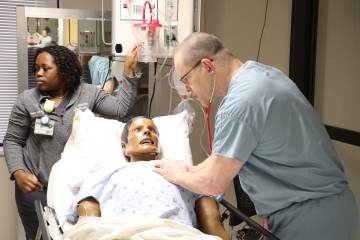
“One of my most memorable moments was watching my new grads participate in a sim with the anesthesia residents and be the ones who knew the answer,” she said. “Seeing them speak up with confidence and apply what they had practiced as a coordinated team showed me just how transformative simulation can be.”
That transformation is exactly what drew West deeper into simulation in the first place.
After taking over the PACU’s new grad program, she noticed something missing in orientation—a gap between knowledge and real-world application. Partnering with the simulation team helped close it, she said. What started as sending learners to established simulations quickly became something more.
“Seeing the direct, real-world benefits of simulation, how it built confidence, closed knowledge gaps and strengthened critical thinking, really sparked my interest,” she said.
Now, West gravitates toward high-acuity, patient-specific scenarios that mirror the pace and pressure of real clinical environments. It’s in those moments, she said, where learners are pushed to prioritize, communicate and think critically all at once.
That’s also where simulation separates itself from traditional learning.
“Simulation gives learners the chance to make mistakes in a safe environment, without the fear of harming a patient,” she said. “That freedom allows them to experiment, ask questions, build confidence and develop their clinical reasoning in a way that goes far beyond what is possible in a classroom.”
For West, facilitation is just as much a learning process as participation. The emotional weight of simulation can be real, she said, and that’s part of what makes it effective.
Her advice to new facilitators reflects that balance.
“Approach everything with an open mind,” West said. “Simulation is a learning process not only for the participants, but also for the facilitator. It’s important to remember that everyone is learning, including you.”
UAB Medicine’s Clinical Simulation program offers opportunities for individuals and teams across UAB Medicine and beyond to practice before they deliver care. We encourage all who provide and support patient care to “Sim First.” Together, we can put our patients’ safety first.
0 Comments