
Sim Stars: Denise Graham, OTR/L
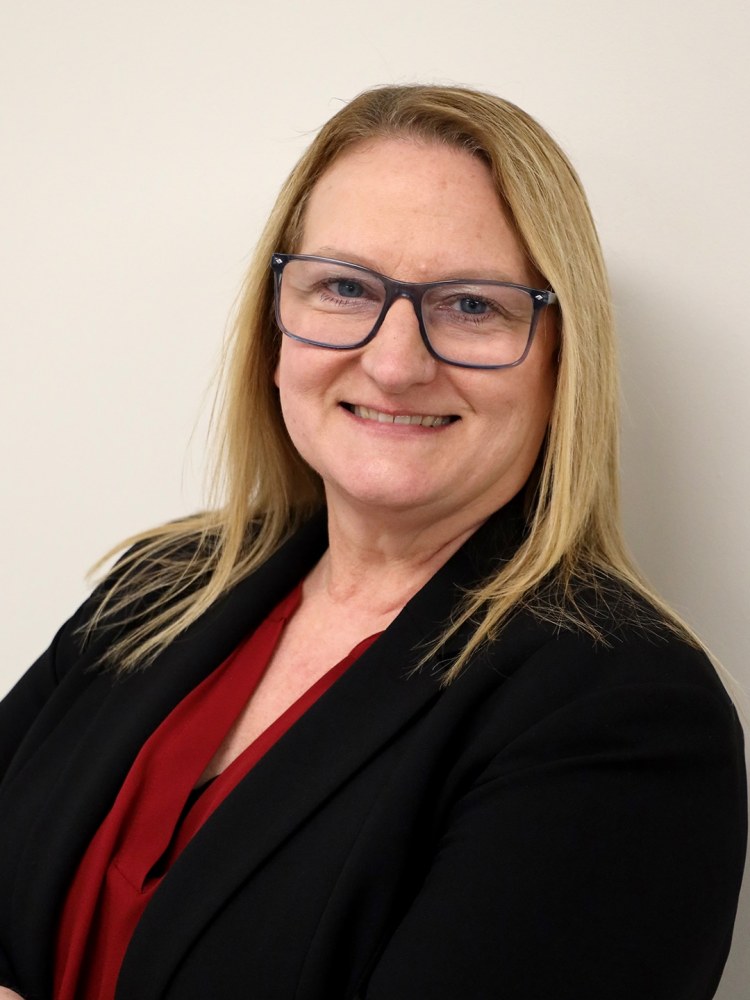
Sim Stars is a regular feature in UAB Clinical Simulation’s think Sim First newsletter, created to highlight the simulation facilitators who bring learning to life. Each month, we spotlight a partner whose work exemplifies excellence in simulation, collaboration and experiential learning for UAB Medicine.
Denise Graham doesn’t just facilitate simulation; she advocates. Like a Johnny Apple-sim, Graham doesn’t hesitate to spread the word and share how simulation can ultimately improve patient outcomes.
But this wasn’t always the case. Graham, rehabilitation services education coordinator with UAB Medicine’s Spain Rehabilitation Center, first became involved in health-care simulation shortly after stepping into her current role.
“I had heard about simulations happening across the hospital, but I hadn’t been closely involved,” Graham said. “That changed almost immediately when I was invited to join a simulation design project with UAB Physical Therapy faculty and UAB Clinical Simulation.”
After working on that project, Graham said she was “absolutely hooked,” prompting her to pursue additional training opportunities and deepen her involvement in simulation-based education.
Today, she especially enjoys facilitating rapid-cycle deliberate practice (RCDP) and “First Five” drills—short, focused exercises that help clinicians practice responding to critical situations.
“They’ve proven to be such an effective and meaningful teaching method,” Graham said.
One of the most rewarding parts of the experience, she said, is watching learners gain confidence in real time.
“One of my favorite parts is watching staff move from feeling uncertain to noticeably more confident in just a 30-minute session,” she said. “You can truly see their growth happening in real time.”
Those First Five drills have become a cornerstone of training within the Inpatient Therapy Department and are now expanding into Acute Care Therapy, as well, she said.
However, for Graham, the most meaningful moments often come when learners experience a breakthrough.
“I’m not sure I could pick just one memorable moment because the most impactful part of these drills is watching things truly ‘click’ for learners,” she said.
Simulation’s immersive environment also allows therapists to develop skills that are difficult to replicate through traditional classroom instruction.
“Having the opportunity to perform hands-on skills in a safe, judgment-free environment allows therapists to learn through doing,” Graham said. “Instead of just hearing or reading about best practices, learners get to apply them, make mistakes, receive immediate feedback and try again in real time.”
That process, she said, helps build muscle memory while strengthening teamwork, communication and decision-making under pressure.
For those interested in becoming simulation facilitators themselves, Graham encourages starting small and leaning on experienced colleagues for support.
“Start small and focus on building strong facilitation skills,” she said. “Being able to guide a group effectively is truly the foundation of good simulation.”
Graham also acknowledges that stepping into a facilitator role can feel intimidating at first.
“I’ll admit that I experienced a bit of imposter syndrome when I first started, but it eased as I worked with similar groups and built confidence through repetition,” she said.
Her biggest piece of advice? Rely on the support systems around you.
“Don’t hesitate to lean on your simulation team,” Graham said. “You don’t have to figure it all out on your own—use the support around you.”
Interested in becoming a facilitator? Email simulation@uabmc.edu to learn more.
UAB Medicine’s Clinical Simulation program offers opportunities for individuals and teams across UAB Medicine and beyond to practice before they deliver care. We encourage all who provide and support patient care to “Sim First.” Together, we can put our patients’ safety first.
0 Comments