
Systems sim supports Highlands nuclear medicine readiness
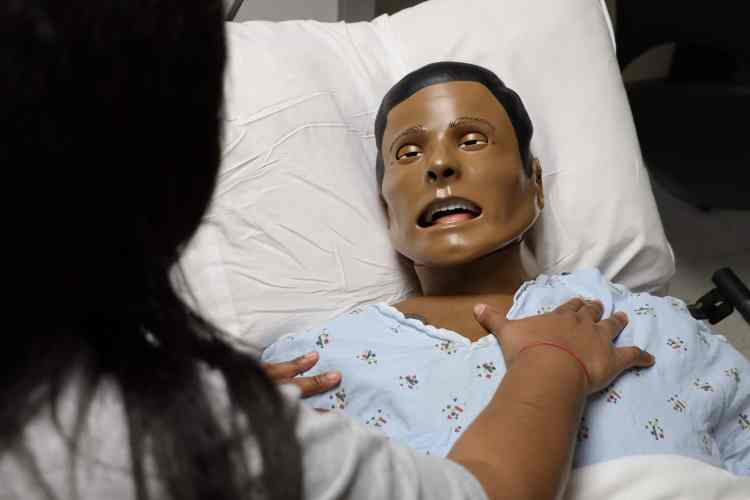
UAB Clinical Simulation partnered with radiology leadership at UAB Highlands to support the relaunch of nuclear medicine stress testing.
Because this exam involves patients at higher risk for cardiac events, the radiology team wanted to ensure staff felt confident and prepared before seeing patients, said April Belle, Clinical Simulation’s director of systems simulation.
When new services launch or teams undergo change, preparation extends beyond reviewing policies and walking through workflows. Systems simulation provides teams with the opportunity to practice together in their real environment before involving real patients.
“This exam has many variables and involves patients with a higher risk of cardiac events,” said Daniel Yoder, manager with Molecular Imaging and Therapeutics. “Our team felt a simulation was needed to prep a new team and have them confident and ready for any challenge.”
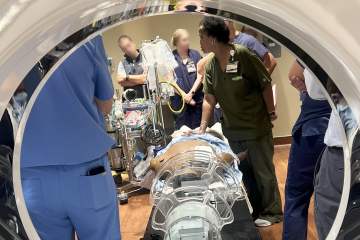
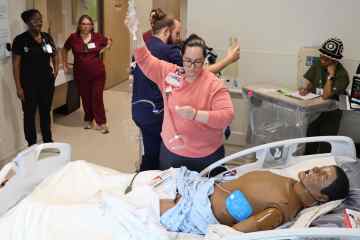
In turn, Clinical Simulation and radiology partnered to develop an in situ simulation for that particular space. In situ (on-site) simulation is a learning experience integrated into actual clinical environments, involving participants who are on-duty clinical team members during their actual workday.
This particular simulation tested how the team would respond if a patient deteriorated during testing. Staff practiced recognizing changes in patient condition, activating help and delivering care within key resuscitation time standards. Just as importantly, the simulation highlighted opportunities to strengthen communication and improve how equipment and space are navigated during emergencies.
“Understanding the need for clear roles and effective communication was one of the most important takeaways,” Yoder said.
According to Belle, these insights are exactly why systems simulations matter.
“They allow teams to identify small system gaps—like equipment location, team communication or role definition—before those gaps affect patient care,” Belle said. “Practicing together builds confidence, strengthens coordination and helps ensure teams are ready when it matters most.”
The collaboration also underscored the value of partnership across departments.
“The simulation team was enthusiastic and involved,” Yoder said. “It was easy to tell they knew this work was important to our ability to effectively care for our patients.”
Systems simulations are not just for new spaces or high-risk procedures, Belle added, noting thatthey can be used to test workflows, prepare teams for change and strengthen patient safety across the organization.
If your team is launching a new service, changing a workflow or simply wants to test how your system responds under pressure, UAB Clinical Simulation can help. To learn more, email simulation@uabmc.edu.
UAB Medicine’s Clinical Simulation program offers opportunities for individuals and teams across UAB Medicine and beyond to practice before they deliver care. We encourage all who provide and support patient care to “Sim First.” Together, we can put our patients’ safety first.

0 Comments