
Sim Stars: Sharon Phelan, M.D.
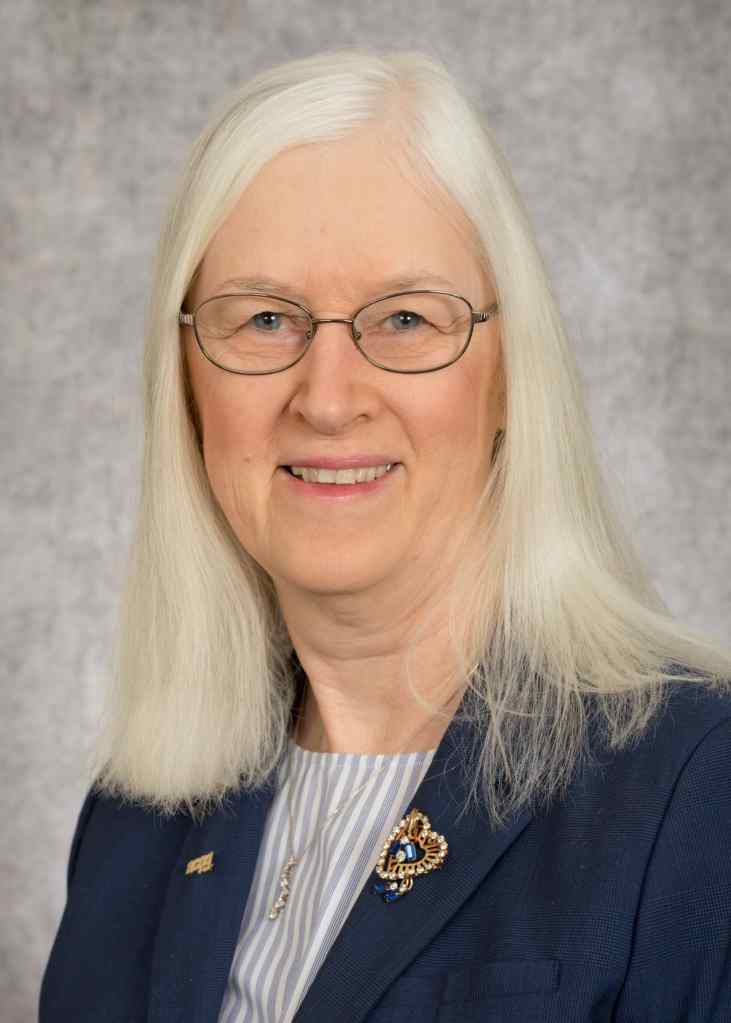
Sim Stars is a regular feature in UAB Clinical Simulation’s think Sim First newsletter, created to highlight the simulation facilitators who bring learning to life. Each month, we spotlight a partner whose work exemplifies excellence in simulation, collaboration and experiential learning for UAB Medicine.
Sharon Phelan, M.D., believes that some of the most important lessons in medicine don’t come from a textbook—they come from doing.
A retired OB/GYN with a 50-year career, Phelan has long embraced hands-on learning. Long before simulation became a formalized discipline, she was leading what she calls “practice sessions” and “dry runs” with residents, medical students and labor and delivery nursing staff.
“They were an excellent way to learn for the individual, the team and the system to improve care,” Phelan said.
Much of her career was spent in Albuquerque, New Mexico, at the University of New Mexico, and she previously served on the University of Alabama at Birmingham Department of Obstetrics and Gynecology faculty from 1990 to 2000. She has also contributed at regional and national levels through the American College of Obstetricians and Gynecologists and maternal mortality committees focused on improving clinical care and education.
Her work on those committees helped shape her simulation focus. After participating in her first EMS-based simulation in 2016 at a freestanding birthing center, Phelan recognized the importance of expanding obstetric emergency training beyond OB providers.
“It was important to expand this learning opportunity about obstetric emergencies to non-obstetric providers,” she said.
Today, Phelan frequently partners with UAB Clinical Simulation’s mobile team, facilitating obstetric emergency simulations within emergency departments and other units. Working in a team’s own clinical environment, she said, reveals more than individual knowledge gaps—it exposes system-level opportunities for improvement.
“It provides an opportunity to determine systems-based issues with resources and support for care,” she said, describing the experience as a quality improvement activity at every level.
Some of her most memorable moments have underscored that point. In one drill, she recalled, a simulated patient with obesity required transport by labor bed to the operating room, only for the team to discover the heavy-duty bed would not fit through the doorway.
“No one had measured that,” she said. “Fortunately, we found it during a drill instead of with a real patient.”
In a postpartum hemorrhage scenario, the team expertly managed the mother but later realized no one had assigned responsibility for the newborn. The “baby” was eventually found resting on a window ledge.
“We had not figured out what needed to happen with the newborn,” she said. “It turned out that we had not built into the sim what would happen to the newborn during the maternal emergency. Again, without the simulation, we would have never thought of that.”
For Phelan, simulation transforms learning into something tangible. The scenario becomes a story—personal, memorable and immediately actionable—especially when paired with thoughtful debriefing.
“Never shortchange that debrief,” she said. “That is an important learning experience for the individual and the team. Always begin by highlighting what went well.”
She also encourages facilitators to lead with curiosity, replacing “why” with “I am curious about…” to give learners space to explain their thinking without feeling defensive.
But her simplest advice may be the most powerful.
“Let the learners struggle a bit,” she said. “They may surprise you with their ability to figure things out.”
UAB Medicine’s Clinical Simulation program offers opportunities for individuals and teams across UAB Medicine and beyond to practice before they deliver care. We encourage all who provide and support patient care to “Sim First.” Together, we can put our patients’ safety first.


0 Comments